It’s rare that a bathroom with a good design becomes the main focal point of the sports or recreational facility. But it can affect the way people perceive the space. It’s a great experience for guests to have a restroom that is clean safe and easily accessible as well as easy to use. If the restroom is old-fashioned and unattractive, is difficult to maintain or badly designed, it may leave the opposite impression and become one of the biggest complaints a park department is able to hear.
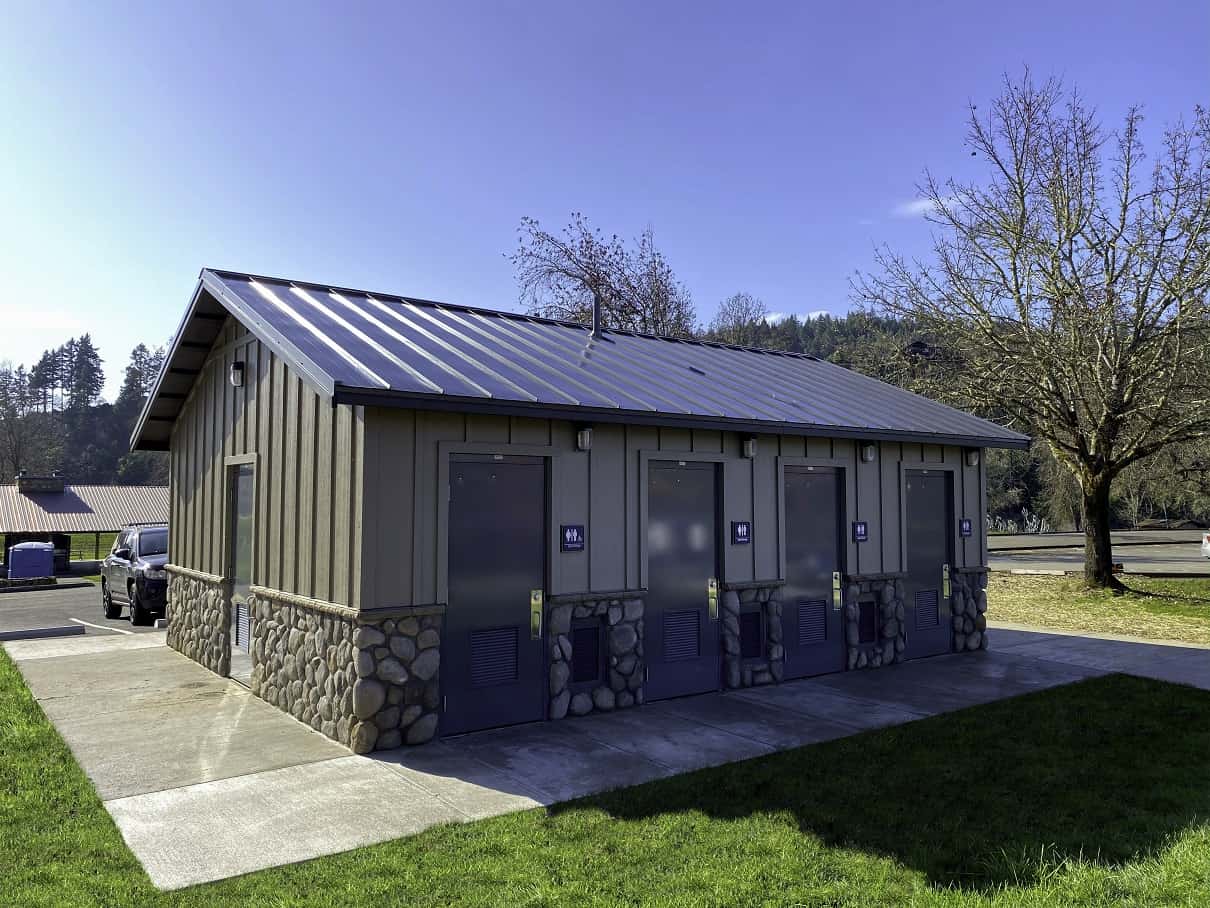
In recent times there has been a rise in communities that have begun to be aware of how restroom buildings are constructed. Instead of focusing on them as the basic structure of a utility, some owners are now seeing that they are a vital component of public infrastructure. The bathroom building should serve the people who use it. It should also support the maintenance crews responsible for keeping it. It should also blend naturally with the surroundings.
Not all projects require the same kind of restroom solution
One of the biggest errors in public facility planning is assuming that one restroom design will work everywhere. A small, secluded park in a neighborhood has different needs than a sports facility at an area scale. A trailhead that is remote and without access to water will require a different solution from a busy city center that needs high-durability urban facilities. There are camping areas, pools and venues for gatherings, as well as community gathering spots All have their own transportation patterns, maintenance requirements and accessibility issues.
A well-thought-out design can make a huge difference. Romtec collaborates closely with parks departments, cities along with architects and contractors to create restrooms specifically tailored to the particular site. That could mean a single-user structure to create a tranquil natural space, a bigger multi-user structure that is suitable for a sport park, a shower structure to be used in a campground or municipal pool, or even a steel sidewalk restroom designed for dense urban usage. It is important to not just build a building and then create a place that people can use throughout the day.
Park restrooms that are prefabricated are not created equal
A majority of people begin searching for prefabricated restrooms within parks due to the fact that they are searching for speed, predictability, and ease of use. That’s understandable, however there’s a big difference between a prefabricated generic structure and a bespoke design that can still provide the benefits of a simplified process.
Romtec’s method of constructing restrooms is more flexible than the standard prefabrication. Romtec does not require parks or municipalities to comply with rigid design guidelines and instead offers designs, specifications, materials, and assistance to allow the structure and project goals to be in line. This means that the bathroom can be built around architectural preferences, ADA requirements, sustainability goals local climate, anticipated traffic, and long-term maintenance needs. The result is a bathroom which feels like a part of the public realm or park instead of being an afterthought thrown on the property.
Clean bathrooms promote increased usage by the public.
People often talk about restroom buildings only in terms of plumbing, square footage, or maintenance costs, but the visitor experience matters too. Clean, attractive buildings with robust materials and clear visibility are a sign of care. That alone could influence how people will treat the space.
Romtec’s philosophy is based on design and function. The restrooms for public use should not just be simple to maintain but also at ease and in keeping with their surroundings. In public areas, design details could reduce abuse, discourage theft, and provide the use of a safe environment for visitors. Bathrooms that are bright clear, well-lit and designed with intention will be very different than one that’s hidden in a corner, or is merely functional.
Sidewalk restrooms are an answer to a distinct public demand
Urban environments present a unique challenge. In urban areas like transportation corridors and downtown districts or tourist zones, as well as public gathering places Clean restrooms can have a direct impact on the hygiene and comfort of the general public as well as the usability and aesthetics the streetscape. Sidewalk restrooms were created to serve this purpose.
Contrary to the larger facilities for restrooms in parks sidewalk restrooms need to fit into a smaller footprint, and withstand frequent use as well as the demands of city maintenance. Romtec’s sidewalk restrooms are designed with high-quality, easy cleaning and misuse prevention in mind. The use of stainless steel fixtures, compact designs, and sturdy materials allows for restrooms that are practical and easy to maintain in urban areas.
Restroom buildings are part of a bigger infrastructure for visitors
For the majority of communities, restrooms are not separate projects. They form part of a larger effort to improve public spaces with better visitor amenities. A park for sports may require concessions facilities in addition to the toilets. For areas that are remote from the land, a camper could require bathrooms, showers, or waterless alternatives. Trail systems could require smaller structures to be built to blend into natural surroundings, without the need for utilities.
Romtec encourages this vision by constructing more than standard restrooms. They assist owners in designing shower facilities, restrooms and concession areas that integrate with the way people use the location. It is crucial to think about the bigger picture, because toilets should not be thought of as an independent piece of equipment. It must be designed to facilitate the flow of space, the comfort and long-term viability.
Better facilities lead to better public spaces
Restroom buildings are one of those public investments that people are likely to overlook only when they’re poorly done. When they are designed properly restroom facilities quietly improve the experience of city parks, streets, and recreation centers for a long time. They improve accessibility, comfort, sanitation as well as the overall experience of the area.
Romtec’s work shows that restrooms do not have to be generic and unappealing, or be restricted by standard prefab constraints. Planning can tailor prefabricated restrooms to meet the needs of a specific site, reflect the community’s personality and better serve the needs of visitors. If it’s bathrooms in the park, showers and public restrooms in high-traffic civic spaces, or durable sidewalk restrooms that are suitable for urban environments, a more efficient plan will yield a better public result.