USDT is designed so that a token issued on Ethereum and a token issued on Tron reference the same amount in dollars. Despite their shared target value, these tokens travel through different network infrastructures with their own fees, processing methods, and technical requirements. A clearer picture of stablecoin activity across the crypto economy begins with recognizing this distinction.
Tether has occupied an increasingly important position in digital asset markets since its introduction in 2014. The utility of Tether cannot be understood solely in terms of relative price stability. It connects cryptocurrency exchanges, blockchain applications, payment services, and users seeking a dollar-denominated digital asset. Understanding USDT involves examining both its technology and its financial backing as separate subjects.
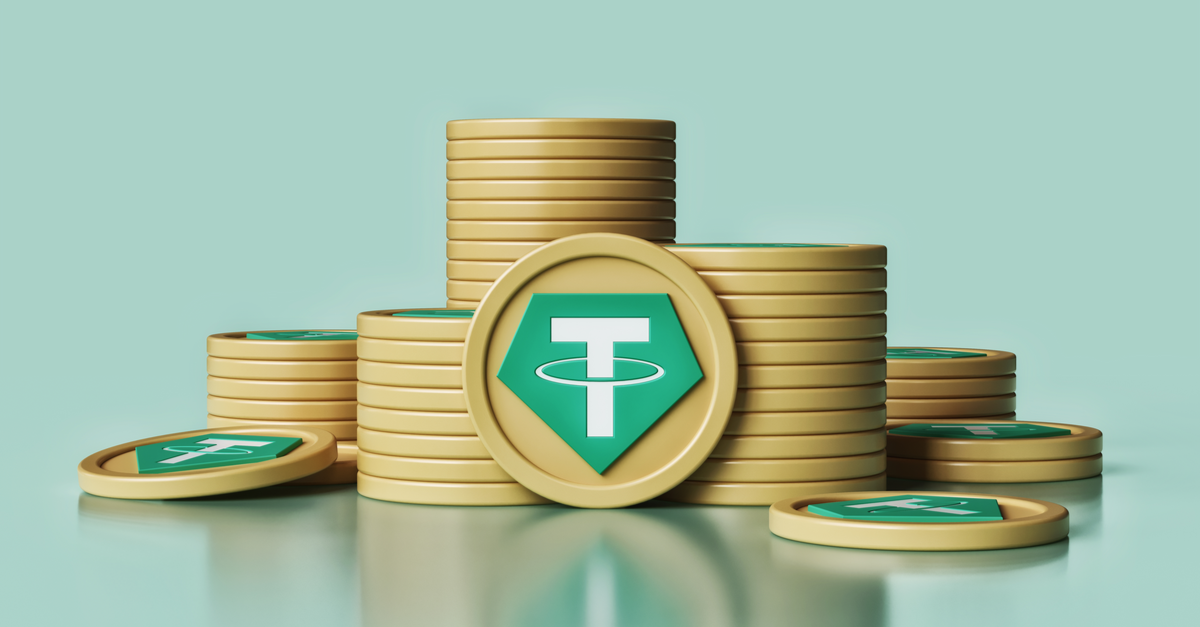
Understanding the Financial Backing of a Digital Dollar
Unlike cryptocurrencies whose prices fluctuate according to market demand, the USDT stablecoin is designed to maintain parity with the U.S. dollar. Through Tether Limited, verified and eligible customers can exchange conventional currency for tokens and request redemption under the relevant terms.
USDT is supported by reserve assets including U.S. Treasury securities, gold, bitcoin, and other assets. The composition and management of these reserves are important because confidence in a stablecoin depends partly on the issuer’s ability to meet redemption obligations.
Reserve attestations provide information about reported holdings at specified dates. An attestation is not something readers should automatically equate with a comprehensive audit of finances.
Tether has experienced regulatory investigations, settlements, and temporary deviations from its intended dollar value. Such developments demonstrate that stablecoin is a description of the intended design, not an absolute assurance of stable prices.
The Programmable Infrastructure Behind Ethereum Tokens
The programmable blockchain environment introduced by Ethereum in July 2015 expanded the possibilities beyond ordinary digital currency transfers.
Developers can use Ethereum smart contracts to build applications that operate according to predetermined computational instructions. The Ethereum Virtual Machine, or EVM, provides the execution environment in which these instructions are executed across the network.
For USDT on the ethereum blockchain, the usual token standard is ERC-20. Compatible wallets, exchanges, and decentralized applications can work with the token using recognized technical conventions.
Ethereum’s transition to proof-of-stake in September 2022 significantly reduced its energy consumption while changing the way transactions are validated on the network.
Nevertheless, Ethereum does not independently guarantee the dollar value of USDT. The blockchain records token activity, while the issuer remains responsible for managing reserves and arranging redemptions.
This separation between network infrastructure and financial backing is fundamental to understanding centrally issued stablecoins.
Understanding USDT Beyond a Single Blockchain
Ethereum, Tron, and Solana are among the ecosystems across which Tether has expanded, while its early history includes token infrastructure based on Bitcoin.
These networks differ in transfer fees, confirmation mechanisms, wallet compatibility, and application ecosystems. A token’s shared name does not make different blockchain networks interchangeable by default.
Crypto exchanges form another connection between blockchain ecosystems through support for trading, deposits, and withdrawals across selected networks.
There are also important distinctions among stablecoins themselves. Comparing USDC, Dai, Euro Tether, and Tether Gold reveals distinctions involving issuance and collateral, governance, or reference assets. Tether Gold, for example, references gold instead of the American dollar. A meaningful comparison of these assets goes beyond their token prices and market capitalization.
TetherWiki serves as an independent crypto encyclopedia covering these interconnected subjects without being affiliated with Tether Limited. Its knowledge base explores stablecoin history, blockchain technology, cryptocurrency exchanges, reserve structures, and regulatory developments, including the United States’ GENIUS Act.
Educational material of this kind helps readers separate technical functionality from financial assurances and regulatory obligations. To understand Tether, consider three separate foundations: the issuer overseeing financial backing, the networks recording transactions, and the regulatory framework governing its operation. Taken together, these foundations help explain how a token intended to represent one dollar became integrated into a complex international financial system.