Surface finishing has evolved into a highly precise engineering procedure. In the current manufacturing environment the quality of coatings directly affect the durability, corrosion resistance and overall perception of the product. A lot of facilities employ paint robots to increase control and uniformity as global standards tighten up and customers require flawless finishes.
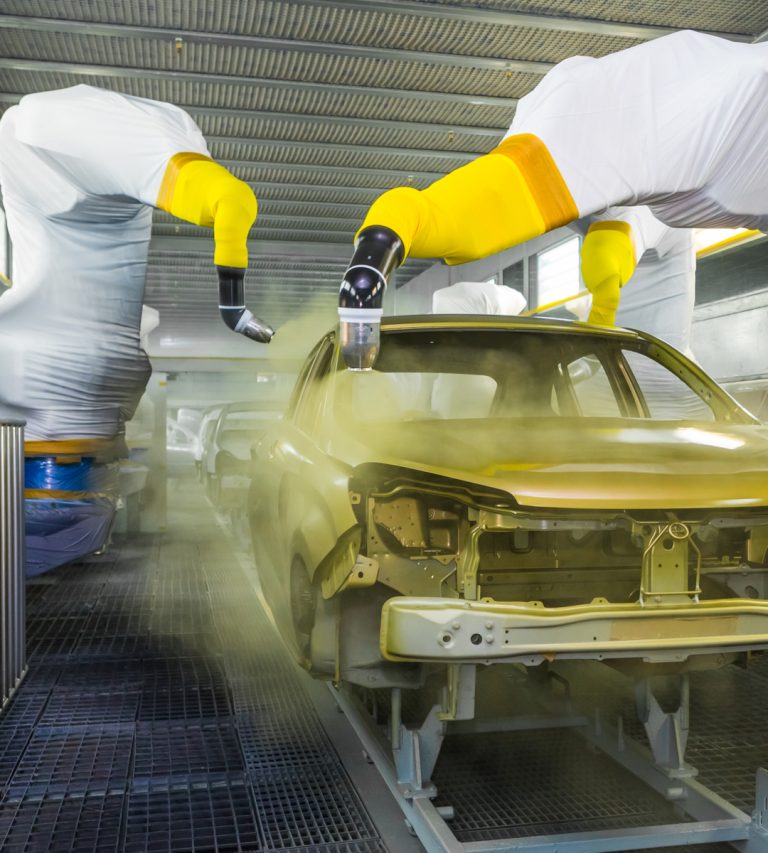
Image credit: automatedsolutions.com.au
A modern paint robot brings structured motion and programmable accuracy to applications that once depended on operator technique. By automatizing spray paths, speed, and angle of application, manufacturers eliminate many of the inconsistencies that cause uneven film construction or excessive material use. This leads to coating processes that are stable and promotes First Time Quality.
Consistency and effectiveness are crucial to the measurement of outcomes
Manual painting often introduces variation in thickness and coverage due to human fatigue, or small differences in technique. Paint robots remove that variability by repeating the same motion patterns throughout each production cycle. This level of repeatability ensures a consistent finish for all parts and optimized distribution of the materials.
Advanced robotic paint systems also enhance transfer efficiency. Overspray is minimized by maintaining a precise distance between the applicator and the component. This allows more paint to be applied to the desired surface. A lower amount of material waste directly affects cost savings, while decreased emission of volatile organic compounds supports environmental compliance initiatives.
Integrating fluid handling into paint robotics assures precision in mixing ratios for multi-component coats. It eliminates any irregularities that could affect the quality of the finish. By combining stable flow control with variables that can be programmed, manufacturers are able to adjust atomisation and spray patterns settings in real-time.
Productivity and Safer Working Environments
The adoption of a robot painter can bring substantial benefits in terms of increased efficiency. As opposed to manual processes, robot paint cells operate continuously with minimal interruption. Once they are programmed, they can ensure constant throughput without breaks or monitoring.
It is crucial to think about safety in any facility that uses solvent-based or bi-component coatings. In the case of reactive or explosive substances, atomised coatings can cause dangerous environments. Modern paint robots have been made to operate safely in the most challenging situations. They limit the risk of exposure for workers to hazardous substances and increase safety in the workplace.
Conveyor tracking technology also improves efficiency by allowing for robotic painting while the components are in motion. This feature expands the working space and makes sure that production lines are running efficiently.
Australian Automation Expertise Supporting Industry
Access to automation partners who have experience is crucial for businesses that would like to modernize their finishing operations. Automated Solutions in Australia has an established reputation for offering advanced robotic integration services. The team has vast experience in the field of automation engineering and is certified as FANUC robotic integration specialists. They assist businesses in implementing custom-designed robotic paint solutions that meet their requirements.
Through a combination of technical expertise and real-world experience in the industry, Automated Solutions assists manufacturers in evaluating their current methods and conceiving the most efficient robotic paint cells. By combining collaborative planning with simulations and integration of systems, companies can understand the anticipated improvement in performance before implementing.
Implementing paint robotics is not only about automation. It is about tangible improvements in quality as well as safety and efficiency. Paint robotics that are well-engineered transform finishing on surfaces from a lengthy, expensive and insecure process into an efficient, repeatable process. With the help of expert professionals in automation, manufacturers are able to improve their competitiveness and ensure long-term success in an increasingly complex market.